AI Email Marketing: How to Personalize, Automate, and Grow Revenue From Email
A complete guide to AI email marketing: personalization, segmentation, subject lines, send time optimization, automated journeys, deliverability, compliance, and metrics.
By the VANGAI team · · 12 min read
Key takeaways
- AI email marketing uses artificial intelligence to personalize content, segment audiences, write and test messages, optimize timing, and automate customer journeys.
- Email remains one of the highest return marketing channels, and AI helps make every message more relevant.
- The biggest wins come from behavior based automated journeys, smarter segmentation, and continuous testing.
- Deliverability, consent, and brand voice must be protected as volume and automation increase.
What is AI email marketing?
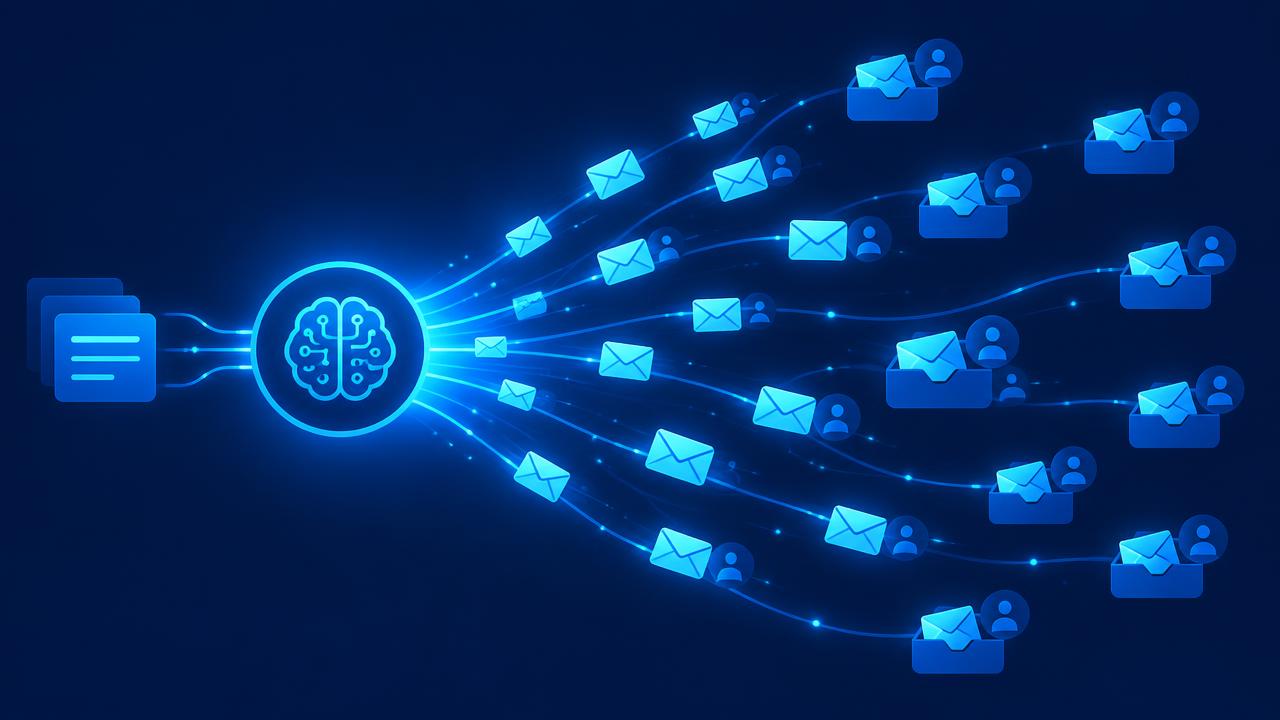
AI email marketing is the use of artificial intelligence to plan, create, personalize, send, and optimize marketing emails. It includes writing subject lines and body copy, segmenting audiences based on behavior, predicting the best time to send, recommending products or content, and automating entire customer journeys that respond to what each person does.
Traditional email marketing often means sending the same message to everyone on a list. AI makes it practical to send the right message to the right person at the right time, even for small teams.
Why email and AI are a powerful combination
Email remains one of the most effective marketing channels because you own the relationship. Unlike social media, you are not dependent on an algorithm to reach your audience. The challenge is relevance: inboxes are crowded, and generic emails get ignored or marked as spam.
AI solves the relevance problem at scale. McKinsey's research on generative AI highlights personalized marketing as one of the most valuable applications. With AI, a small business can deliver the kind of personalization that used to require a large team.
Key AI email marketing capabilities
Content creation
AI drafts subject lines, preview text, body copy, and calls to action in your brand voice. It can generate multiple variations for testing and adapt a single message for different segments.
Personalization
Beyond inserting a first name, AI can tailor content based on interests, purchase history, browsing behavior, location, and stage in the customer journey.
Smart segmentation
AI groups subscribers by behavior and predicted intent, such as likely to buy soon, at risk of churning, or highly engaged, rather than relying only on basic demographics.
Send time optimization
AI predicts when each subscriber is most likely to open and engage, and schedules delivery accordingly.
Product and content recommendations
AI recommends products, articles, or offers based on what similar customers engaged with.
Predictive analytics
AI estimates who is likely to purchase, churn, or unsubscribe, so you can act proactively. See predictive analytics for business.
Automated testing
AI runs tests on subject lines, content, and timing, then automatically sends the best performing version.
Performance analysis
AI summarizes campaign results and explains what worked and why.
High impact automated email journeys
The biggest returns usually come from automated journeys triggered by behavior. AI makes them smarter.
Welcome series
Introduce new subscribers to your brand, set expectations, and guide them toward a first action. AI can adapt the series based on what each subscriber clicks.
Lead nurture
Send educational content matched to a lead's interests and stage until they are ready for a sales conversation. See AI lead generation.
Abandoned cart or inquiry follow up
Remind people who showed interest but did not complete a purchase or booking, with personalized content.
Post purchase
Thank customers, provide helpful information, request reviews, and suggest complementary products or services.
Re engagement
Win back inactive subscribers with relevant offers or content, and clean your list of those who do not respond.
Renewal and upsell
Remind customers about renewals and suggest upgrades based on usage.
Event and appointment reminders
Reduce no shows with timely, personalized reminders.
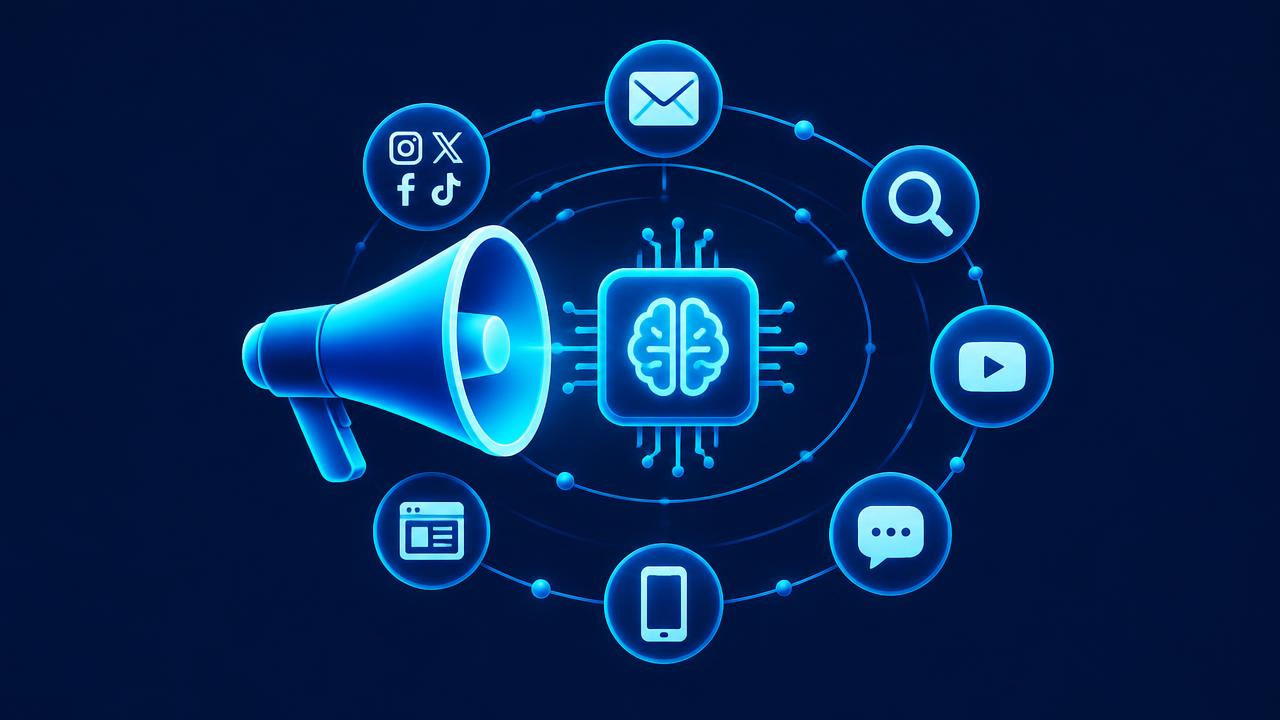
How to implement AI email marketing
Step 1: Audit your current email program
Review list size and health, engagement rates, existing automations, and revenue from email. Identify gaps.
Step 2: Clean and organize your data
Connect your email platform to your CRM and ecommerce or booking system so AI has behavioral data to work with. Remove invalid and long inactive addresses. See AI CRM.
Step 3: Define your brand voice
Create guidelines with tone, vocabulary, and examples so AI generated emails sound like you. See AI content creation.
Step 4: Build core journeys first
Start with welcome, nurture, and post purchase journeys. These deliver value continuously once set up.
Step 5: Add personalization and segmentation
Introduce behavior based segments and dynamic content blocks.
Step 6: Test continuously
Test subject lines, content, offers, and timing. Let AI help identify winners, but review results critically.
Step 7: Monitor deliverability and engagement
Track inbox placement, bounces, spam complaints, and unsubscribes closely as you scale.
Protecting deliverability
More automation can mean more emails, which can hurt deliverability if not managed well. Follow these practices:
- Authenticate your domain with standard email authentication protocols. Google's email sender guidelines explain requirements for bulk senders.
- Send only to people who opted in.
- Make unsubscribing easy.
- Keep complaint rates low by sending relevant content.
- Remove inactive subscribers regularly.
- Warm up new sending domains gradually.
- Avoid misleading subject lines.
Compliance
Email marketing is regulated in many countries.
- In the United States, the CAN SPAM Act requires honest headers and subject lines, identification as an advertisement where applicable, a physical address, and a working opt out.
- In the European Union and other regions, GDPR and related laws require a lawful basis, often consent, for marketing emails and careful handling of personal data.
- Be honest in claims. The FTC warns against unsupported claims, including about AI.
AI does not change these obligations. Build compliance into every template and journey.
Metrics that matter
- Deliverability: inbox placement, bounce rate, spam complaints.
- Engagement: click rate, click to open rate, replies.
- Conversion: purchases, bookings, sign ups, or meetings from email.
- Revenue: total and per subscriber revenue from email.
- List health: growth rate, unsubscribe rate, inactive percentage.
- Journey performance: conversion rates for each automated journey.
Note that open rates have become less reliable due to privacy features in some email apps, so focus on clicks and conversions.
Common mistakes
- Sending more instead of better. Volume without relevance damages deliverability.
- Publishing unedited AI copy. Generic emails get ignored.
- Over personalization. Using data in ways that feel intrusive erodes trust.
- Ignoring list hygiene. Old, inactive addresses hurt performance.
- No clear call to action. Every email should have a purpose.
- Not connecting email to sales. Engaged leads should reach salespeople quickly.
AI email marketing for small businesses
Small businesses can start simply:
- Use AI to draft a monthly newsletter from recent content and news.
- Set up a welcome series and a post purchase or post service follow up.
- Use AI suggested subject lines and send time optimization in your email platform.
- Review results monthly and improve one thing at a time.
Even these basics can meaningfully increase revenue and customer loyalty. See AI for small business for more ideas.
Where AI email marketing is heading
Email is becoming more individualized. Instead of campaigns sent to segments, AI will increasingly compose and time emails for each person based on their behavior and preferences, with marketers setting strategy, guardrails, and brand standards. AI agents may manage entire journeys under human supervision. Businesses that build clean data, strong consent practices, and a clear brand voice now will benefit most. For the broader picture, read our AI marketing tools guide.
Writing better emails with AI: practical prompts
Subject lines
"Write ten subject lines for an email announcing [offer] to [audience]. Keep each under 50 characters. Mix curiosity, benefit driven, and direct styles. Avoid spam trigger words and exaggerated claims."
Newsletter
"Summarize these three articles into a newsletter for [audience]. Open with a short personal note in our brand voice, give each article two sentences and a link, and end with one clear call to action."
Nurture email
"Write the third email in a nurture sequence for leads interested in [service]. They downloaded [resource] last week. Share one practical tip related to that resource, include a short customer example, and invite them to book a call without being pushy."
Re engagement
"Write a friendly re engagement email for subscribers who have not clicked in six months. Acknowledge that inboxes get busy, remind them what they signed up for, and let them choose to stay subscribed or leave."
Always review AI drafts for accuracy, tone, and compliance before sending.
Segmentation strategies powered by AI
Moving beyond basic lists can dramatically improve relevance. Useful AI driven segments include:
- Engagement level: highly engaged, occasionally engaged, and inactive subscribers.
- Purchase intent: subscribers showing buying signals, such as visiting pricing pages or opening recent offers.
- Lifecycle stage: new subscriber, lead, first time customer, repeat customer, lapsed customer.
- Interests: topics or products each subscriber engages with most.
- Value: predicted lifetime value.
- Churn risk: customers showing signs of disengagement.
Each segment can receive different content, frequency, and offers, making every email more relevant.
Email design and accessibility
Content matters most, but design affects results. Keep layouts simple and mobile friendly, use a clear hierarchy with one main message per email, write descriptive link text, include alt text for images, and ensure sufficient color contrast. Many subscribers read email on phones, so short paragraphs and large buttons improve engagement. AI can help generate alt text and check readability, but review the final result.
Integrating email with the rest of your business
Email becomes far more powerful when connected to other systems:
- CRM: sync contacts, lead scores, and sales activity so emails reflect the full relationship.
- Ecommerce or booking platform: trigger emails based on purchases, carts, and appointments.
- Website: personalize emails based on pages visited.
- Customer service: pause promotional emails when a customer has an open complaint.
- Analytics: measure revenue from email accurately.
See our AI integration guide for how to connect these systems.
Testing strategy
Effective testing follows a few principles:
- Test one variable at a time so you know what caused the change.
- Use meaningful sample sizes to avoid misleading results.
- Measure the right outcome, usually clicks or conversions rather than opens.
- Document results so the whole team learns.
- Apply learnings to templates and future campaigns.
AI can suggest hypotheses, generate variations, and analyze results, but human judgment decides what to test and how to interpret findings.
Building a sustainable sending rhythm
Consistency builds trust. Decide how often each segment should hear from you, based on engagement and preferences. Let subscribers choose frequency or topics when possible. Use AI to monitor fatigue signals, such as declining clicks or rising unsubscribes, and automatically reduce frequency for affected segments. A sustainable rhythm protects both deliverability and relationships.
Using email to support sales conversations
For businesses with a sales team, email can warm up leads before calls, follow up after meetings with relevant resources, and re engage prospects who went quiet. AI can personalize these messages based on CRM notes and conversation history, while salespeople review and send the most important ones personally. See AI sales automation.
A 30 day AI email marketing plan
Week 1
Audit your list, remove invalid and long inactive addresses, confirm domain authentication, and review current engagement and revenue.
Week 2
Define your brand voice guidelines and build or improve your welcome series with AI assisted drafts.
Week 3
Create a behavior based segment, such as engaged subscribers who have not purchased, and launch a personalized campaign for it.
Week 4
Review results, test one new subject line approach, and plan the next journey to build, such as post purchase or re engagement.
Repeating this cycle every month steadily improves results without overwhelming your team.
Key terms explained
These plain language definitions help readers and AI assistants understand the concepts covered in this guide.
- Deliverability: The ability of your emails to reach the inbox rather than spam.
- Segmentation: Dividing subscribers into groups based on behavior, interests, or lifecycle stage.
- Triggered email: An email sent automatically in response to an action, such as signing up or abandoning a cart.
- Send time optimization: Using AI to send each email when a subscriber is most likely to engage.
- List hygiene: Removing invalid and inactive addresses to protect sender reputation.
- Domain authentication: Technical records, such as SPF, DKIM, and DMARC, that prove your emails are legitimate.
- Click through rate: The share of recipients who click a link in an email.
Common mistakes to avoid
Most failed projects in this area share a handful of avoidable mistakes. Watch for these as you plan and roll out your work:
- Mailing inactive subscribers aggressively and damaging deliverability.
- Letting AI invent claims, discounts, or statistics.
- Personalizing so heavily that emails feel intrusive.
- Testing many variables at once and learning nothing clear.
- Ignoring unsubscribe and consent requirements.
Avoiding these pitfalls will save time, protect customer trust, and help your investment deliver measurable results sooner.
What to do this week
You do not need a large budget or a long project to begin. Check that your sending domain is authenticated, remove addresses that have not engaged in over a year, and write short brand voice guidelines. Then use AI to rebuild your welcome series and measure clicks and conversions over the next month. Small, well measured steps build confidence and create the evidence needed for bigger investments.
How VANGAI helps
VANGAI designs AI powered email systems that connect to your CRM and sales data, automate high value journeys, personalize content in your brand voice, and protect deliverability and compliance. Learn more about our AI content and marketing service.
The bottom line
AI email marketing helps you send more relevant emails with less effort and turn your list into a reliable revenue channel. Build core automated journeys, personalize based on behavior, protect deliverability and consent, keep your brand voice, and measure clicks, conversions, and revenue.
Want to turn email into a growth engine? Book a free discovery call and we will map your email opportunities together.
Frequently asked questions
How is AI used in email marketing?
AI writes and tests subject lines and content, segments audiences by behavior, personalizes messages, predicts the best send times, recommends products or content, and automates customer journeys.
Does AI improve email open and click rates?
AI can improve engagement by making emails more relevant and better timed. Focus on clicks and conversions, since open rates are less reliable due to privacy features.
Is AI email marketing compliant with spam laws?
AI does not change legal obligations. Follow the CAN SPAM Act, GDPR where applicable, and other local laws, including consent, honest subject lines, and easy unsubscribes.
What email automations should I set up first?
Start with a welcome series, lead nurture, abandoned cart or inquiry follow up, and post purchase journeys. These deliver ongoing value once built.
Will AI written emails sound robotic?
Not if you define your brand voice, provide examples, and have a person review and edit messages before sending.
Sources and further reading
Ready to put this into action?
Book a free discovery call and we will map the highest impact AI opportunities for your business.
Book a Call →