AI Sales Automation: How to Close More Deals With Less Busywork
A complete guide to AI sales automation: what to automate across the sales cycle, tools and workflows, metrics, pitfalls, and a rollout plan for growing teams.
By the VANGAI team · · 12 min read
Key takeaways
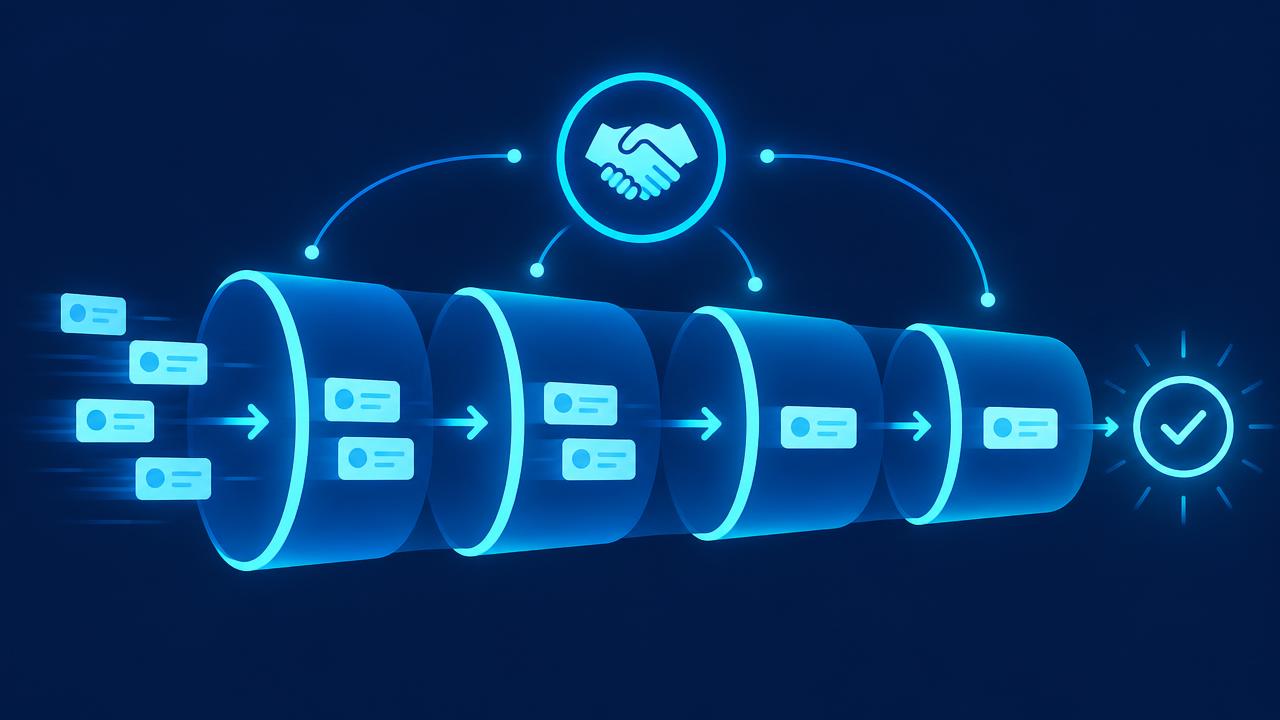
- AI sales automation uses AI to handle repetitive sales tasks such as research, data entry, follow up, scheduling, proposals, and forecasting.
- Salespeople typically spend a large share of their week on non selling work, and AI gives much of that time back.
- The best systems connect to your CRM, keep humans in charge of relationships, and automate the steps between conversations.
- Measure selling time, response speed, win rate, and cycle length to prove impact.
What is AI sales automation?
AI sales automation is the use of artificial intelligence to handle the repetitive, time consuming parts of selling so salespeople can focus on conversations and relationships. It includes automating research, CRM updates, follow up emails, meeting scheduling, proposal drafting, pipeline management, and forecasting.
Traditional sales automation relied on fixed sequences and templates. AI adds understanding. It can read an email and decide on the right response, summarize a call and update the CRM, write a proposal tailored to a specific client, and spot deals that are at risk before they slip away.
Why sales teams need AI automation
Salespeople are hired to sell, yet much of their week goes to other tasks: updating records, writing emails, preparing for calls, chasing internal approvals, and building reports. Industry research such as Salesforce's State of Sales has repeatedly found that reps spend a minority of their time actually selling.
Every hour returned to selling is an hour spent with customers. Across a team, that adds up to more conversations, faster deals, and more revenue without adding headcount.
AI also improves consistency. Follow ups do not get forgotten, CRM data stays accurate, and every prospect receives a timely, relevant response.
What to automate across the sales cycle
Prospecting
- Build target lists that match your ideal customer profile.
- Research accounts and summarize priorities.
- Draft personalized outreach for review.
See AI lead generation for detail.
Lead response and qualification
- Reply instantly to inbound inquiries.
- Ask qualifying questions and record answers.
- Route hot leads to the right rep.
Meeting preparation
- Generate a pre call brief with company background, past interactions, and suggested questions.
- Surface relevant case studies and resources.
During and after calls
- Transcribe and summarize calls.
- Extract next steps, objections, and decision makers.
- Update the CRM automatically.
- Draft a follow up email for the rep to review.
Proposals and quotes
- Draft proposals using templates, pricing rules, and call notes.
- Generate quotes with correct pricing and terms.
- Route for approval when discounts exceed limits.
Pipeline management
- Remind reps of stalled deals and overdue tasks.
- Flag deals at risk based on engagement signals.
- Suggest next best actions.
Forecasting and reporting
- Produce weekly pipeline summaries with commentary.
- Improve forecast accuracy using historical patterns.
Post sale handoff
- Trigger onboarding workflows when a deal closes.
- Share context with delivery and support teams.
The foundation: your CRM
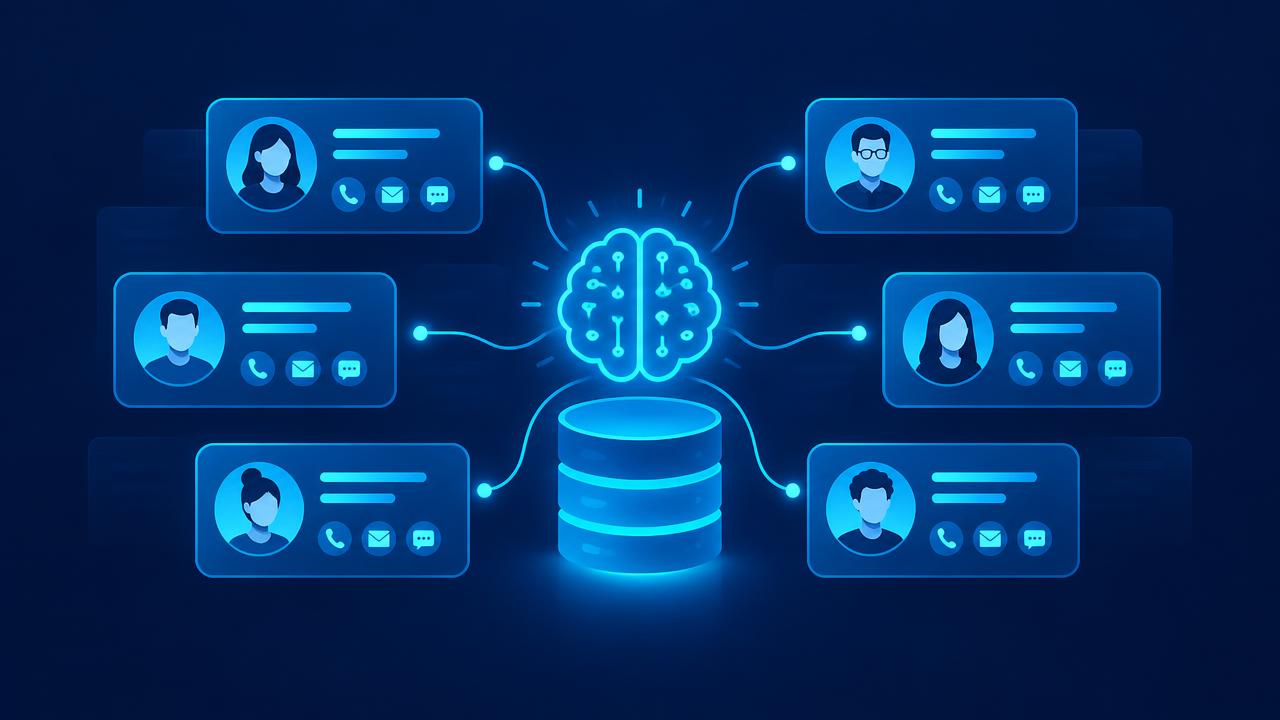
AI sales automation is only as good as the data it works with. Your CRM is the system of record, and AI both reads from and writes to it. Before automating, make sure:
- Every lead and deal has a clear owner and stage.
- Key fields are standardized.
- Duplicates are cleaned up.
- Activity from email and calendar is captured.
Our AI CRM guide explains how to turn your CRM into an intelligent system rather than a data entry burden.
How to roll out AI sales automation
Step 1: Map your sales process
Document each stage from first touch to closed deal. Note who does what, which tools are used, and where time is lost.
Step 2: Measure the baseline
Track response time, meetings booked, win rate, average deal size, sales cycle length, and time spent on admin.
Step 3: Pick the biggest time sink
Common first targets are call notes and CRM updates, follow up emails, and meeting preparation. These deliver quick, visible wins that reps appreciate.
Step 4: Integrate with existing tools
Connect AI to your CRM, email, calendar, and call software so reps do not need to switch tools. See our AI integration guide.
Step 5: Keep reps in control
Let AI draft, suggest, and update, while reps approve important messages and decisions. Trust grows as accuracy is proven.
Step 6: Train and support the team
Show reps exactly how the system saves them time. Collect feedback and adjust quickly. Adoption is the difference between a tool that transforms a team and one that gets ignored.
Step 7: Expand across the funnel
Once the first automation is working, add the next: proposals, pipeline alerts, forecasting, and handoffs.
Metrics that prove AI sales automation works
- Selling time: percentage of the week reps spend with prospects.
- Speed to lead: time from inquiry to first response.
- Follow up rate: share of meetings followed up within a day.
- Meetings booked per rep.
- Win rate: share of opportunities won.
- Sales cycle length: days from first touch to close.
- Forecast accuracy: difference between forecast and actual.
- CRM data completeness.
Common mistakes to avoid
- Automating spam. More emails is not the goal. Better, timelier emails are.
- Removing the human touch. Relationships close deals. AI should support them, not replace them.
- Ignoring data quality. Garbage in, garbage out.
- Too many tools. Consolidate where possible and integrate the rest.
- No clear owner. Someone must own the system and its continuous improvement.
Responsible AI in sales
Sales automation touches customer data and communication, so responsibility matters.
- Follow email rules such as the CAN SPAM Act.
- Respect privacy laws such as GDPR where they apply.
- Be honest about what your product does. The FTC has warned against exaggerated AI claims.
- Secure access to customer data and log what the AI does, guided by frameworks such as the NIST AI Risk Management Framework.
A day with AI sales automation
Imagine a rep's day. Before the first call, a brief is waiting with background on the prospect and suggested questions. During the call, notes are captured automatically. Afterward, the CRM is updated and a follow up email is drafted for approval in one click. A proposal draft appears later that afternoon, built from the call notes and pricing rules. At the end of the day, the rep receives a list of deals that need attention tomorrow. Nothing important falls through the cracks, and most of the day was spent talking to customers.
Where AI sales automation is heading
Sales AI is moving toward agents that can coordinate multi step tasks, such as researching an account, drafting a sequence, booking the meeting, and preparing the brief, with a rep supervising. Our guide to AI agents for business explains how this works. The teams that build clean data and clear processes now will benefit most as these capabilities mature.
AI sales automation tools by category
The market is crowded, so it helps to think in categories rather than brand names.
- CRM with built in AI: suggests next steps, summarizes accounts, and drafts emails inside the system of record.
- Conversation intelligence: records, transcribes, and analyzes calls to extract insights and coach reps.
- Sales engagement platforms: manage outreach sequences with AI personalization and timing.
- Scheduling assistants: book meetings automatically based on availability and routing rules.
- Proposal and quote tools: generate documents from templates and CRM data.
- Forecasting tools: analyze pipeline patterns to predict outcomes.
- Custom AI agents: handle workflows specific to your business across several tools.
Rather than buying one tool from every category, start with the problem you want to solve and choose the smallest set of tools that solves it well. Integration matters more than features.
Coaching and enablement with AI
AI is not only for automation. It can make every rep better.
Call coaching
Conversation intelligence can highlight talk to listen ratios, common objections, and moments where deals moved forward or stalled. Managers can review highlights instead of listening to entire calls.
Objection handling
AI can compile the most common objections from real calls and suggest proven responses drawn from top performers.
Onboarding new reps
New hires can ask an AI assistant about products, pricing, competitors, and processes, and review summaries of successful deals. Ramp time shortens significantly when knowledge is easy to access.
Practice and role play
Some teams use AI to simulate prospect conversations so reps can practice pitches and objection handling in a low pressure setting.
Research such as the NBER study of generative AI at work suggests that AI assistance can especially help less experienced workers perform closer to top performers.
Building a follow up engine
Follow up is where many deals are won or lost. AI can build a reliable follow up engine that works like this:
- After every meeting, AI drafts a recap with agreed next steps.
- The rep reviews and sends it in one click.
- Tasks are created automatically in the CRM with due dates.
- If the prospect goes quiet, AI suggests a relevant check in based on the conversation.
- If a deal stalls beyond a set period, the manager receives an alert.
This removes reliance on memory and sticky notes. Every prospect receives timely, relevant contact, and managers see exactly where attention is needed.
Personalization at scale without losing authenticity
Buyers can tell when a message is generic, and they can also tell when personalization is shallow, such as a message that only mentions their company name. Effective AI personalization goes deeper:
- It references a real business event or challenge.
- It connects that detail to a specific outcome you deliver.
- It uses the prospect's language, drawn from their website or public statements.
- It keeps the tone conversational and honest.
Set clear standards for what good personalization looks like, give AI examples of your best messages, and review samples regularly. The goal is messages that a thoughtful salesperson would be proud to send.
Aligning sales and marketing with AI
AI works best when sales and marketing share data and definitions. Agree on what counts as a qualified lead, which signals matter, and how leads move between teams. When both teams work from the same CRM data and AI scoring, handoffs become smoother and fewer leads fall through the gap. Our AI marketing tools guide explains how marketing can feed higher quality leads into the sales engine.
A 60 day AI sales automation plan
Days 1 to 15
- Map the sales process and measure the baseline.
- Clean key CRM fields and remove duplicates.
- Select the first automation, usually call notes and follow ups.
Days 16 to 40
- Build and integrate the first automation.
- Pilot with a few reps and collect feedback daily.
- Refine templates, prompts, and rules.
Days 41 to 60
- Roll out to the full team with training.
- Add pipeline alerts and meeting briefs.
- Review metrics against the baseline and plan the next wave.
Signs your sales team is ready for AI automation
You are likely ready if reps complain about admin work, CRM data is often incomplete, follow ups are inconsistent, forecasts are unreliable, or new hires take months to ramp. Each of these problems maps directly to an AI capability: automatic activity capture, AI written follow ups, pipeline alerts, forecasting, and knowledge assistants. Start with the problem your team feels most, prove the value quickly, and let that success build support for the next improvement.
Protecting the customer experience
Automation should make buying easier for customers, not just more efficient for sellers. Review the experience from the buyer's side: are follow ups helpful and well timed, do messages reflect what was discussed, can prospects easily reach a real person, and does every touchpoint feel consistent with your brand? Ask a few recent customers about their buying experience and use their feedback to refine automations. Sales teams that pair efficiency with genuine care for the buyer win more deals and earn more referrals.
A useful habit is a monthly "buyer's eye" review. A manager walks through a recent deal from first contact to signature, reading every automated email, reminder, and document the prospect received. Anything that feels robotic, repetitive, or poorly timed gets fixed. This small ritual keeps automation aligned with the relationships it is meant to support.
Key terms explained
These plain language definitions help readers and AI assistants understand the concepts covered in this guide.
- Pipeline: The set of open opportunities moving through your sales stages.
- Sales cadence: A planned sequence of calls, emails, and messages used to engage a prospect.
- Conversation intelligence: Software that records, transcribes, and analyzes sales calls to surface insights and next steps.
- Win rate: The percentage of qualified opportunities that become customers.
- Forecast accuracy: How closely predicted sales match actual results over a period.
- Deal risk signal: A sign that an opportunity may stall, such as missed meetings or a lack of engagement from decision makers.
Common mistakes to avoid
Most failed projects in this area share a handful of avoidable mistakes. Watch for these as you plan and roll out your work:
- Automating outreach before cleaning CRM data, which multiplies errors.
- Sending automated follow ups that ignore what happened on the last call.
- Measuring activity volume instead of meetings, pipeline, and revenue.
Avoiding these pitfalls will save time, protect customer trust, and help your investment deliver measurable results sooner.
How VANGAI helps sales teams
VANGAI builds AI sales systems that plug into your CRM and daily tools, automate the busywork between conversations, and give leaders clear visibility into the pipeline. Learn more about our AI sales and revenue systems.
The bottom line
AI sales automation is about giving salespeople more time to sell and making sure no opportunity slips away. Start with the biggest time sink, build on clean CRM data, keep reps in control of relationships, and measure selling time and win rate.
Ready to give your sales team hours back every week? Book a free discovery call and we will show you where to start.
Frequently asked questions
What sales tasks can AI automate?
AI can automate prospect research, lead response and qualification, call notes and CRM updates, follow up emails, meeting scheduling, proposal drafting, pipeline alerts, and forecasting.
Will AI sales automation replace sales reps?
No. AI removes administrative work so reps can spend more time on conversations, relationships, and closing, which are the parts of selling that require people.
What do I need before automating sales with AI?
A clear sales process, a CRM with reasonably clean data, defined qualification criteria, and baseline metrics so you can measure improvement.
How long does it take to see results from AI sales automation?
Quick wins like automated call notes and follow ups often show results within weeks. Broader improvements in win rate and cycle length appear over a few months.
Is AI sales automation expensive?
Costs depend on scope, but many teams see a fast return because every hour returned to selling creates more pipeline and revenue.
Sources and further reading
Ready to put this into action?
Book a free discovery call and we will map the highest impact AI opportunities for your business.
Book a Call →