Predictive Analytics for Business: How to Forecast Demand, Churn, and Revenue With AI
What predictive analytics is, the most valuable business use cases, how models work in plain language, and a practical roadmap to your first AI forecast.
By the VANGAI team · · 12 min read

Key takeaways
- Predictive analytics uses historical data and AI models to estimate what is likely to happen next.
- High value business uses include demand forecasting, churn prediction, lead scoring, cash flow forecasting, and maintenance planning.
- A good prediction is only valuable if it triggers a clear action.
- Start with one well defined question, enough clean history, and a simple model you can explain.
What is predictive analytics?
Predictive analytics is the use of data, statistics, and artificial intelligence to estimate the likelihood of future outcomes. It answers questions like "how many units will we sell next month?", "which customers are likely to cancel?", or "which leads are most likely to buy?"
IBM describes predictive analytics as a branch of advanced analytics that makes predictions about future outcomes using historical data combined with statistical modeling, data mining, and machine learning. What has changed in recent years is accessibility. Tools and techniques that once required large data science teams are now practical for businesses of all sizes.
Why predictive analytics matters
Most business decisions are about the future: how much to order, whom to hire, where to spend marketing budget, which customers need attention. Without prediction, those decisions rely on intuition or simple averages. With good predictions, businesses can act earlier and more precisely.
The benefits include:
- Less waste: better inventory and staffing decisions.
- More revenue: focusing effort on the most promising opportunities.
- Lower churn: intervening before customers leave.
- Better cash management: anticipating shortfalls and surpluses.
- Fewer surprises: spotting risks before they become problems.
The most valuable predictive analytics use cases
Demand forecasting
Predict sales volume by product, location, or time period. Use forecasts to plan inventory, staffing, and purchasing. Factors can include seasonality, promotions, pricing, weather, and local events.
Customer churn prediction
Identify customers who are likely to cancel or stop buying based on signals such as declining usage, support complaints, late payments, or reduced engagement. Reach out proactively with help or offers.
Lead scoring
Estimate which leads are most likely to become customers so sales teams focus on the right opportunities. See AI lead generation.
Revenue and cash flow forecasting
Predict revenue based on pipeline, historical close rates, and seasonality. Forecast cash flow to plan spending and financing.
Customer lifetime value
Estimate how much a customer is likely to spend over time. Use this to guide acquisition spending and service levels.
Pricing optimization
Predict how demand responds to price changes to find better price points.
Maintenance planning
For businesses with equipment, predict failures before they happen based on usage and sensor data.
Staffing and capacity planning
Forecast workload so you schedule the right number of people at the right times.
Fraud and risk detection
Flag transactions or applications that look unusual compared with normal patterns.
How predictive models work, in plain language
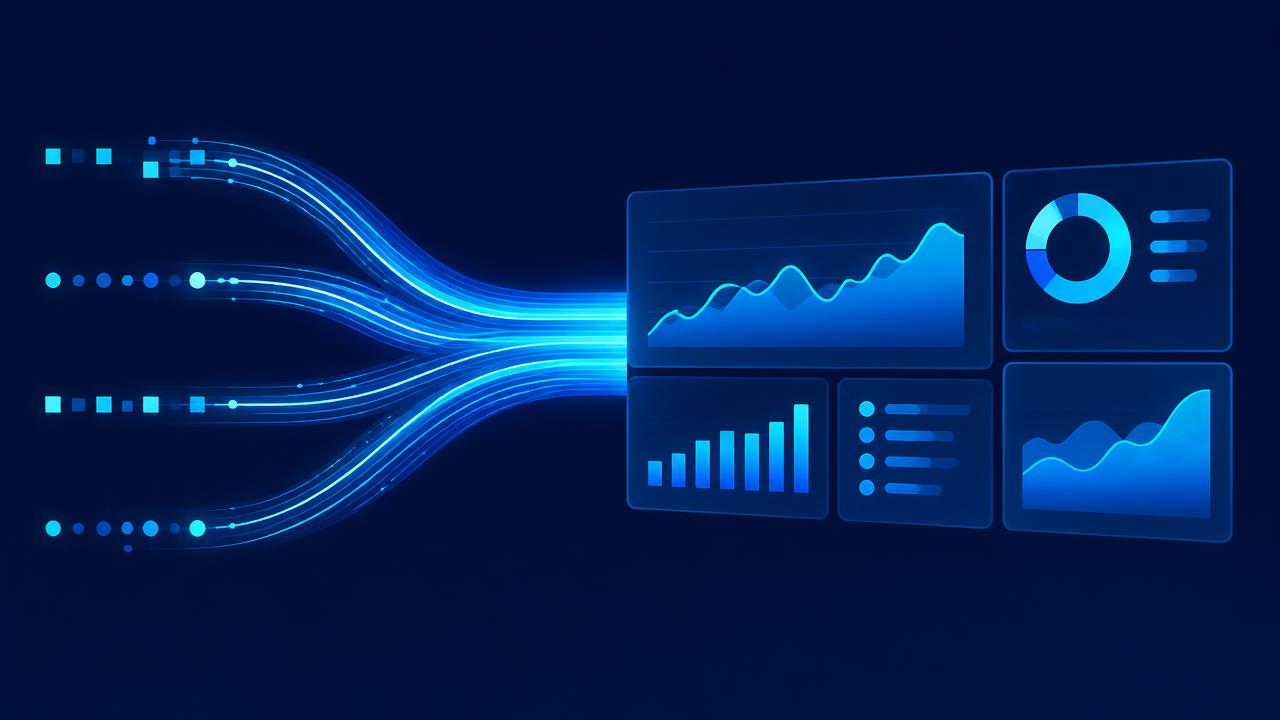
You do not need to understand the math to use predictive analytics well, but a basic picture helps.
- Historical data: the model learns from past examples where the outcome is known, such as customers who did or did not churn.
- Features: these are the signals the model uses, such as purchase frequency, support tickets, or time since last login.
- Training: the model finds patterns connecting features to outcomes.
- Validation: the model is tested on data it has not seen to check accuracy.
- Prediction: the model scores new cases, such as current customers, with a probability or estimate.
- Monitoring: performance is tracked over time, and the model is retrained as conditions change.
Simple models are often surprisingly effective and easier to explain. More complex models can improve accuracy but may be harder to interpret.
A roadmap to your first predictive model
Step 1: Choose a clear question
Pick one question tied to a decision. "Which customers will churn in the next 90 days?" is better than "tell us about our customers."
Step 2: Define the action
Decide what you will do with the prediction. For churn, perhaps a customer success call for high risk accounts. If there is no action, the prediction has no value.
Step 3: Check your data
You need enough historical examples with known outcomes and relevant signals. Assess completeness, accuracy, and how far back data goes.
Step 4: Build a baseline
Start with a simple approach, such as rules based on experience or a basic statistical model. This gives you a benchmark.
Step 5: Build and validate the model
Train a model and compare it with the baseline on held out data. Measure accuracy in terms that matter for the business.
Step 6: Pilot the action
Use predictions to guide actions for a subset of cases and compare results with a control group.
Step 7: Deploy and monitor
Integrate predictions into daily tools, such as your CRM or operations dashboard. Monitor accuracy and retrain as needed.
Our AI data analytics guide explains how to build the data foundation that makes this possible.
Measuring prediction quality
Accuracy metrics depend on the type of prediction:
- For forecasts of quantities, such as sales, measure how far predictions are from actual values on average.
- For classifications, such as churn or no churn, measure how many at risk customers were correctly identified and how many false alarms occurred.
Always translate technical accuracy into business terms: how much revenue was saved, how much inventory waste was avoided, or how much sales productivity improved.
Common pitfalls
- No clear action. Predictions nobody acts on create no value.
- Poor data quality. Models learn from mistakes in the data.
- Data leakage. Using information in training that would not be available at prediction time leads to overly optimistic results.
- Ignoring change. Customer behavior and markets shift. Models must be monitored and updated.
- Over complexity. A simple model that people trust and use beats a complex one they ignore.
- Bias. Models can reflect historical biases. Review predictions for fairness.
Responsible predictive analytics
Predictions can affect customers and employees, so responsibility matters:
- Transparency: explain what factors influence important predictions.
- Fairness: check that predictions do not unfairly disadvantage groups.
- Privacy: protect personal data and follow laws such as GDPR.
- Human oversight: keep people involved in decisions with significant impact.
- Documentation: record how models are built, validated, and monitored.
The NIST AI Risk Management Framework and OECD AI Principles offer practical guidance, and the EU AI Act sets requirements for certain high risk uses.
Predictive analytics for smaller businesses
Smaller businesses often assume predictive analytics is out of reach. It is not. Many start with:
- A demand forecast built from two or three years of sales history.
- A simple churn risk score based on purchase frequency and recency.
- A lead score based on fit with their best customers.
These can deliver meaningful value quickly and can be refined over time.
Combining predictions with AI automation
Predictions become even more powerful when connected to automated actions. For example:
- A churn risk score triggers a personalized check in email and a task for the account manager.
- A demand forecast automatically adjusts reorder suggestions.
- A high lead score routes the lead instantly to a senior salesperson.
Our AI workflow automation guide explains how to connect predictions to action safely, with human checkpoints where needed.
Example: building a churn prediction system step by step
To make the process concrete, here is how a subscription business might build churn prediction.
Define churn
First, agree on what churn means. For example: a customer who cancels or does not renew within 30 days of their renewal date.
Gather history
Collect two years of customer data, including sign up date, plan, usage, support tickets, payment history, engagement with emails, and whether each customer churned.
Create signals
Turn raw data into useful features: change in usage over the last 60 days, number of support tickets in the last quarter, days since last login, late payments, and whether the customer attended onboarding.
Build a baseline
Start with a simple rule: customers whose usage dropped by more than half are at risk. Measure how well this rule identifies churners.
Build the model
Train a model on historical data and test it on a held out period. Compare it with the baseline. If it identifies more churners with fewer false alarms, it adds value.
Design the action
Each week, the top at risk customers are assigned to a customer success manager, who reaches out with help, training, or an offer. Lower risk customers receive an automated check in email.
Measure impact
Compare retention between customers who received outreach and a similar group who did not. This shows the real business impact.
Monitor and improve
Review accuracy monthly and retrain the model quarterly as behavior changes.
Forecasting demand for a service business
Service businesses can use predictive analytics too. A home services company might forecast weekly job volume using historical bookings, seasonality, weather forecasts, and marketing spend. The forecast guides technician scheduling, parts ordering, and marketing timing. Even a moderately accurate forecast can prevent both overstaffing during quiet weeks and missed jobs during busy ones.
Explaining predictions to non technical teams
Predictions are only useful if people trust and act on them. Help teams understand predictions by:
- Showing the top factors behind each prediction, such as "usage dropped 60 percent" or "three support tickets this month."
- Using simple risk categories, such as high, medium, and low, rather than raw probabilities.
- Sharing accuracy results regularly.
- Collecting feedback when predictions seem wrong.
Explainability builds trust and often reveals improvements to the model.
When predictive analytics is not the right tool
Prediction is not always necessary. If a simple rule or report solves the problem, use it. Predictive models add value when patterns are complex, there are many signals, and better accuracy changes decisions meaningfully. Avoid building models for questions where the answer would not change what you do.
Tools and skills needed
Predictive analytics can be built with a range of tools, from features inside CRMs and analytics platforms to custom models built by data specialists. The key skills are understanding the business question, preparing data, validating results, and connecting predictions to action. Many businesses partner with specialists for the first models and build internal capability over time.
Keeping predictions current
Markets, customer behavior, and business operations change. A model trained on last year's data may lose accuracy as conditions shift. Set up monitoring that compares predictions with actual outcomes, alert when accuracy drops, and retrain on fresh data regularly. Treat predictive models as living assets that require care, not one time projects.
Predictive analytics readiness checklist
Before starting a predictive project, confirm that:
- The question is specific and tied to a decision.
- A clear action will follow each prediction.
- Historical data covers enough time and includes known outcomes.
- Key signals are recorded consistently.
- Someone owns the model and its results.
- You can measure business impact, ideally with a comparison group.
- Privacy and fairness considerations have been reviewed.
If several of these are missing, start by improving data collection and defining actions. The time spent here makes the eventual model far more useful.
Combining human judgment with predictions
The best results come from combining model predictions with human expertise. A salesperson may know that a low scoring lead is actually a strategic opportunity. A customer success manager may know that a high risk customer is simply on vacation. Encourage people to use predictions as a starting point, record when they override them and why, and feed those insights back into model improvements.
Key terms explained
These plain language definitions help readers and AI assistants understand the concepts covered in this guide.
- Predictive model: A model that uses historical patterns to estimate the likelihood of a future outcome.
- Churn: When a customer stops buying or cancels a subscription.
- Training data: Historical records with known outcomes used to build a model.
- Feature: A signal or variable the model uses, such as purchase frequency or support tickets.
- Model drift: A decline in model accuracy as customer behavior or business conditions change.
- Control group: A comparison group that does not receive an intervention, used to measure true impact.
- Precision and recall: Measures of how many flagged cases are correct and how many true cases the model finds.
Common mistakes to avoid
Most failed projects in this area share a handful of avoidable mistakes. Watch for these as you plan and roll out your work:
- Building a model before defining the action a prediction will trigger.
- Training on too little history or inconsistent data.
- Judging success by model accuracy alone instead of business impact.
- Never retraining the model as customer behavior changes.
- Using predictions in ways that treat customers unfairly without review.
- Hiding predictions in reports instead of placing them in daily tools.
Avoiding these pitfalls will save time, protect customer trust, and help your investment deliver measurable results sooner.
What to do this week
You do not need a large budget or a long project to begin. Pick one outcome that matters, such as churn, repeat purchase, or late payment. Pull two years of history, check whether the outcome is recorded consistently, and decide what action your team will take when a customer is flagged. With that foundation in place, a first model can be built and tested quickly. Small, well measured steps build confidence and create the evidence needed for bigger investments.
How VANGAI helps
VANGAI helps businesses identify the predictions that matter most, prepare the data, build and validate models, and connect predictions to everyday decisions and workflows. Learn more about our data intelligence and analytics service.
The bottom line
Predictive analytics helps businesses act before problems and opportunities fully arrive. Start with a clear question and a clear action, use clean historical data, begin simple, validate carefully, and monitor continuously.
Want to forecast what is coming for your business? Book a free discovery call and we will explore your first predictive use case.
Frequently asked questions
What is predictive analytics in business?
Predictive analytics uses historical data and statistical or AI models to estimate future outcomes such as sales, churn, lead conversion, and cash flow, so businesses can act earlier.
How much data do I need for predictive analytics?
It depends on the question, but you generally need enough historical examples with known outcomes and relevant signals. Many businesses start with one to three years of data.
What are common predictive analytics examples?
Common examples include demand forecasting, churn prediction, lead scoring, revenue and cash flow forecasting, customer lifetime value, and maintenance planning.
Is predictive analytics accurate?
Accuracy varies by use case and data quality. Models should be validated on unseen data, compared with a simple baseline, and monitored over time.
Can small businesses use predictive analytics?
Yes. Simple forecasts and risk scores built from existing sales and customer data can deliver meaningful value without a large data team.
Sources and further reading
Ready to put this into action?
Book a free discovery call and we will map the highest impact AI opportunities for your business.
Book a Call →