Why Businesses Should Focus on Search Rankings and AEO in 2026
Why every business needs both strong Google search rankings and Answer Engine Optimization (AEO) to be found on Google, ChatGPT, Perplexity, and AI Overviews, plus a practical plan to start.
By the VANGAI team · · 11 min read
Key takeaways
- Customers now find businesses in two places: classic search results on Google and Bing, and direct answers from AI tools like ChatGPT, Perplexity, Gemini, and Google AI Overviews.
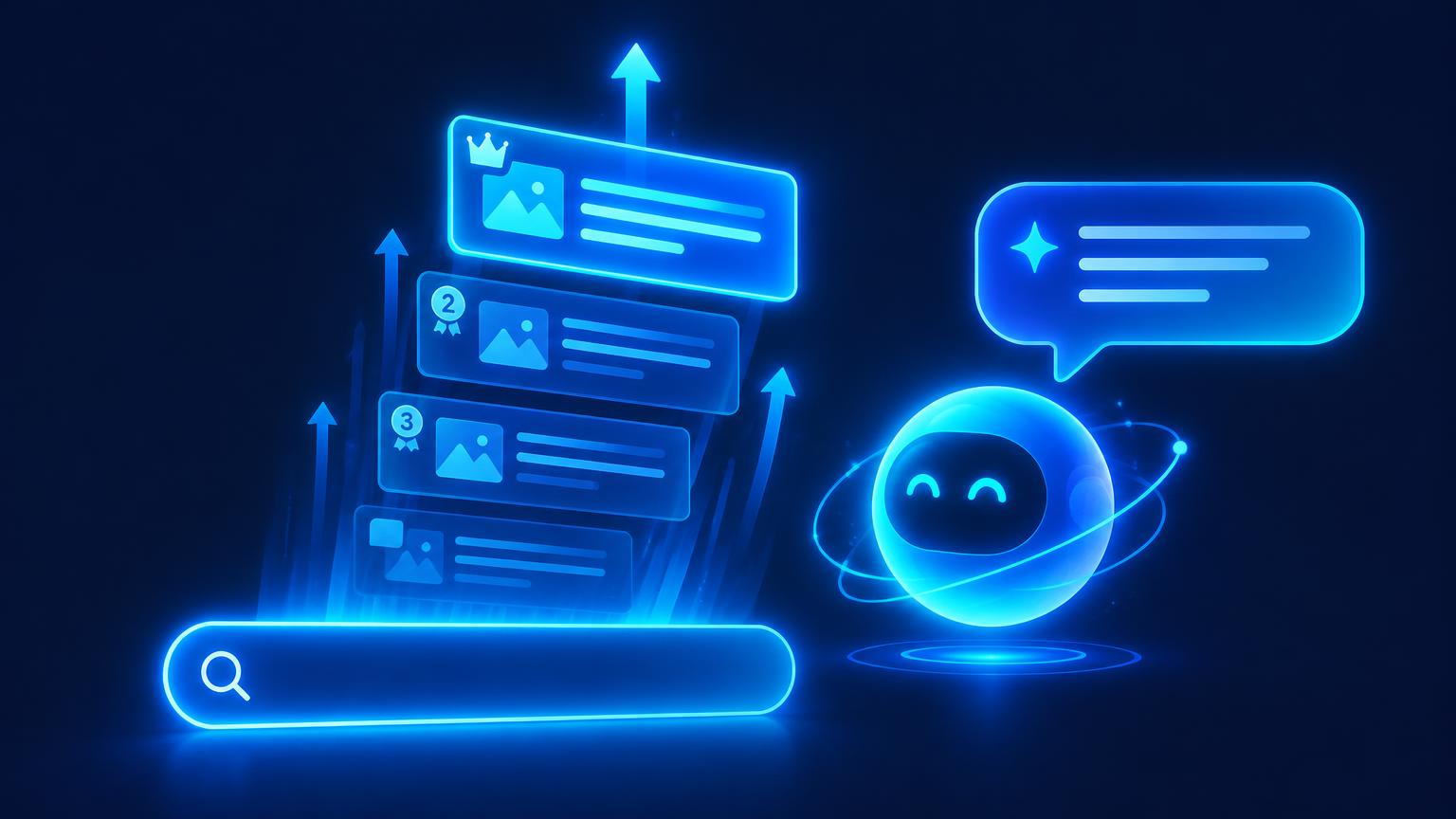
- Improving your search rankings earns clicks from people comparing options; Answer Engine Optimization (AEO) earns citations and recommendations inside AI answers.
- Both disciplines reward the same foundation: clear, accurate, well-structured pages that directly answer real customer questions.
- Search visibility compounds over time, unlike paid ads that stop the moment the budget stops.
- Visibility only pays off when every resulting inquiry gets a fast response, which is why VANGAI connects search work to an AI-powered CRM and booking system.
The short answer
Businesses should focus on search rankings and AEO because that is where buying decisions now begin. When someone needs a plumber, a dentist, a lawyer, or a software partner, they either type a question into Google or ask an AI assistant. If your business does not show up in the results or in the answer, you are not in the consideration set, no matter how good your work is.
The good news is that you do not need two separate strategies. The same work, done well, serves both: accurate pages, clear answers, consistent business information, and proof that you are a real, trustworthy company.
What changed: search is now split in two
For about twenty years, being found online meant one thing: ranking on the first page of Google. That is still important. Google continues to process billions of searches every day, and its own documentation explains how it crawls, indexes, and ranks pages to answer them.
What changed is how answers are delivered. Google now shows AI Overviews at the top of many results pages, summarizing an answer before the traditional links. At the same time, millions of people ask ChatGPT, Perplexity, Microsoft Copilot, and Gemini for advice directly. OpenAI reports that ChatGPT search pulls from the live web and cites sources, which means the pages it chooses to cite get real visibility and real traffic.
This creates two kinds of discovery:
- Click-based discovery. A person searches, scans a list of results, and clicks the businesses that look most relevant. Strong search rankings win here.
- Answer-based discovery. A person asks a question and receives a direct answer, often with a short list of recommended providers or cited sources. AEO wins here.
Most customers now move between both. They might ask an AI tool to explain their options, then search Google to check reviews and visit websites. A business that appears in only one of those moments loses the customer in the other.
What improving search rankings means today
Improving your search rankings is the practice of making your website easy for search engines to find, understand, and trust, so it appears higher when people search for what you offer. Google summarizes the fundamentals in its Search Essentials and its starter guide. In practical terms it includes:
- Technical health. Pages load quickly, work on phones, can be crawled, and are listed in a sitemap. Google's guidance on Core Web Vitals explains the performance signals it measures.
- Relevant pages for each service. A dedicated page for every service and, where relevant, every industry or area you serve, written in the words customers actually use.
- Helpful content. Google's helpful content guidance rewards pages written for people, with real expertise, rather than pages written only to rank.
- Local presence. A complete and accurate Google Business Profile, consistent name, address, and phone number everywhere, and genuine customer reviews.
- Authority. Mentions and links from reputable websites, industry associations, and local publications that signal your business is legitimate.
None of this is a trick. It is the discipline of making your website the clearest, most useful answer to the questions your customers ask.
What AEO means and why it matters now
Answer Engine Optimization is the practice of structuring your content and business information so AI systems can understand it, trust it, and quote it accurately. Some people call the broader version Generative Engine Optimization, or GEO. Academic research has started to measure this: a study from Princeton and partner universities on Generative Engine Optimization found that adding clear statistics, credible citations, and quotable statements to content measurably increased how often it appeared in AI-generated answers.
AI answer engines tend to favor content that:
- Answers the question directly in the first sentence or two, then expands with detail.
- Uses clear structure such as headings phrased as questions, short paragraphs, lists, and tables.
- Includes specific facts such as numbers, timelines, steps, and definitions, rather than vague marketing claims.
- Cites credible sources so the AI can verify claims against other trusted material.
- Matches consistent business information across your website, directories, and profiles, so the AI is confident about who you are and what you do.
- Uses structured data such as Schema.org markup for your organization, services, FAQs, and articles, which helps machines read your page accurately.
AEO matters now because AI answers often name only a handful of businesses. In a list of ten blue links, the fifth result still gets some attention. In an AI answer that recommends three providers, the fourth business gets nothing. Being one of the sources an AI trusts is a meaningful competitive advantage, and it is still early enough that many of your competitors have not started.
Why both, and not just one
It is tempting to pick one. Some businesses assume AI will replace search, so they skip their search rankings. Others assume AI is a fad and ignore AEO. Both are risky bets.
Here is why you need both:
- They share a foundation. AI tools frequently retrieve information from pages that already rank well in traditional search. Strong rankings make you more likely to be retrieved and cited. Clear, answer-first content makes you more likely to rank. The work reinforces itself.
- Customers use both. A buyer might discover you in an AI answer and then search your name on Google to check reviews, hours, and your website. If your search presence is weak, the AI recommendation goes nowhere.
- Risk is spread out. Algorithms and AI models change. A business visible in several channels is not wiped out when one of them updates.
- The intent is high. People searching or asking about a specific problem are usually close to a decision. That is far more valuable than an interruption-style ad.
The business case: why visibility compounds
Paid advertising is useful, but it rents attention. The moment you stop paying, the traffic stops. Search visibility behaves differently. A helpful page that ranks well and is cited by AI tools can keep bringing in qualified visitors for months or years after it is published.
That compounding effect changes the economics:
- Lower cost per inquiry over time. The upfront effort of creating a strong page is spread across every visitor it brings in for its entire life.
- Higher trust. People tend to trust businesses that appear in organic results and AI recommendations more than ads, because they feel earned rather than bought.
- Better-informed prospects. Visitors who arrive after reading your answers already understand your process, pricing posture, and approach, so sales conversations are shorter and more productive.
- A durable asset. Your library of service pages, industry pages, and articles becomes a business asset you own, unlike ad accounts or rented audiences.
We are careful not to promise specific traffic numbers or rankings. Nobody can guarantee a position on Google or a mention in ChatGPT. What we can say is that businesses with clear, accurate, well-structured websites give themselves a much better chance than businesses with thin or outdated ones.
What great search and AEO content looks like
If you want to see the difference between content that gets ignored and content that gets found, compare two answers to the question "How much does a water heater replacement cost?"
Weak version: "Contact us today for the best water heater service in town. We offer competitive pricing and great customer service."
Strong version: "Most standard tank water heater replacements cost between a typical low and high range depending on tank size, fuel type, and installation complexity. Tankless systems usually cost more upfront but last longer. Here is what affects the price, what is included, and how to get an exact quote."
The strong version answers the question, explains the variables, and points naturally to the next step. Search engines can rank it. AI tools can quote it. And a real customer finds it genuinely useful. Every page on your site should aim for that standard.
A practical checklist for each important page:
- Start with a one or two sentence direct answer.
- Use headings that match real customer questions.
- Include specifics: steps, timelines, factors, and honest ranges where appropriate.
- Add a short FAQ section with the questions your team hears every week.
- Cite credible sources for any statistics or regulations you mention.
- Add structured data for your organization, services, and FAQs.
- End with a clear next step, such as booking a call.
Common mistakes that hold businesses back
- One page for everything. A single "Services" page cannot rank for ten different services. Each service deserves its own focused page.
- Inconsistent business details. Different addresses, phone numbers, or business names across directories confuse both search engines and AI tools.
- Writing for algorithms instead of people. Keyword stuffing and generic filler are easy to detect and do not get cited.
- No proof. Pages without reviews, credentials, real examples, or an identifiable company behind them struggle to earn trust.
- Ignoring what happens after the click. Visibility is wasted when inquiries sit unanswered for hours.
That last mistake is the most expensive one, and it is where most marketing plans fall apart.
Visibility is only half the job
Getting found is the start of the customer journey, not the end. When your search rankings and AEO start working, more people call, fill out forms, and send messages. If those inquiries are not answered quickly, the visibility you earned turns into business for a competitor who responds first.
This is why VANGAI treats search visibility and operations as one system. Our Generative Engine Optimization and AI search visibility service improves how your business appears on Google and in AI answers, and our AI-powered CRM platform makes sure every resulting inquiry is captured, answered, and routed. An AI appointment setter responds within seconds and books qualified prospects directly on your calendar, while 24/7 voice agents answer calls your team cannot get to. For a deeper look at the local side, our guide to AI search for local businesses walks through specific steps.
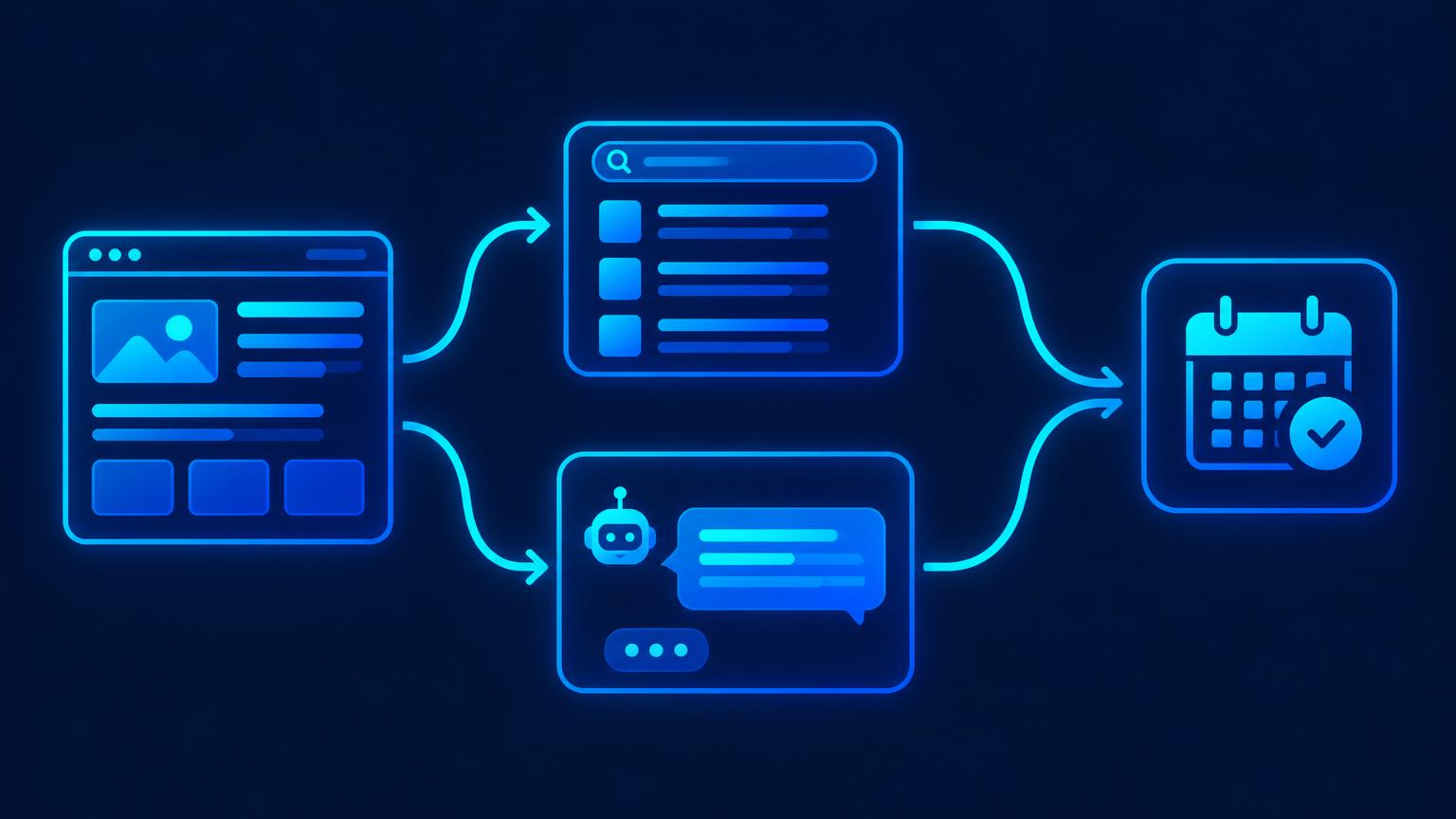
The result is a connected path: a customer finds you, gets a fast and accurate response, and books an appointment, all tracked in one place so you can see which pages and channels actually produce revenue.
How to get started this month
You do not need to rebuild everything at once. A focused 30-day plan looks like this:
- Week one: fix the foundation. Confirm your site is indexed in Google Search Console, submit a sitemap, and make sure your business name, address, and phone number are identical everywhere.
- Week two: map customer questions. List the 20 questions customers ask most often before buying. These become your headings, FAQs, and article topics.
- Week three: upgrade your top pages. Rewrite your most important service pages with answer-first summaries, specifics, FAQs, and structured data.
- Week four: connect the follow-up. Make sure every form, call, and message lands in a CRM with an instant response, so new visibility turns into booked appointments.
After that, publish helpful content consistently, keep earning genuine reviews, and review results monthly. Search and AI visibility reward steady, honest effort over time.
The bottom line
Customers are asking questions on Google and AI tools every day, and they are choosing the businesses that show up with clear, trustworthy answers. Focusing on your search rankings and AEO puts your business in front of them in both places, builds an asset that compounds, and lowers your dependence on paid ads. Pair that visibility with fast, automated follow-up and you turn being found into being booked.
If you want help building both sides of that system, book a call with VANGAI and we will review how your business currently appears in search and AI answers, and where the biggest opportunities are.
Frequently asked questions
What is the difference between improving search rankings and AEO?
Improving search rankings focuses on getting your website listed higher in Google and Bing results so people click through. Answer Engine Optimization (AEO) focuses on making your content easy for AI tools like ChatGPT, Perplexity, Gemini, and Google AI Overviews to understand, trust, and cite when they answer questions. Both rely on clear, accurate, well-structured content.
Is AEO replacing traditional search?
No. Traditional search remains a major source of customers, and AI tools often draw on pages that already rank well. AEO adds a new layer of visibility on top of search rather than replacing it, which is why businesses benefit from doing both.
How long does it take to see results?
Technical fixes and business listing cleanups can take effect within weeks. Rankings and AI citations for competitive topics usually build over several months. Results depend on your industry, competition, and the quality of your content, and no one can honestly guarantee a specific ranking or AI mention.
Do small and local businesses need AEO?
Yes. People increasingly ask AI tools for local recommendations, such as the best dentist or HVAC company near them. Accurate business information, genuine reviews, and clear service pages help AI tools recommend local businesses with confidence.
What is structured data and why does it help?
Structured data is code, usually based on Schema.org, that labels information on a page such as your business name, address, services, articles, and FAQs. It helps search engines and AI systems read your page accurately and can make your content eligible for richer search features.
How does VANGAI help with search rankings and AEO?
VANGAI improves how your business appears on Google and in AI answers through answer-first content, structured data, and consistent business information, then connects that visibility to an AI-powered CRM, voice agents, and an appointment setter so every resulting inquiry gets a fast response and a clear path to booking.
Sources and further reading
Ready to put this into action?
Book a free discovery call and we will map the highest impact AI opportunities for your business.
Book a Call →