AI Consulting for Small Business: What It Is, What It Costs, and How to Start
A practical guide to AI consulting for small businesses: what a consultant does, realistic first projects, pricing models, red flags, and a payback calculator you can use with your own numbers.
By the VANGAI team · · 11 min read

Key takeaways
- AI consulting for small business means finding the few workflows where AI saves real time or wins more customers, then building and supervising them.
- Good first projects are narrow: answering missed calls, booking appointments, following up on quotes, and keeping customer records up to date.
- Pricing usually falls into an assessment fee, a fixed project fee, or a monthly managed plan. Ask for scope in writing before you pay.
- The best consultants start from your customer records and processes, not from a tool they want to sell.
- Use the payback calculator in this article to test whether a first project makes sense with your own numbers.
The short answer: AI consulting helps you pick the right first project
AI consulting for small business is a service that helps an owner decide where artificial intelligence will actually help, then sets it up so it works inside the business every day. A good consultant does not start with a chatbot or a long list of tools. They start with a simple question: where is your team losing time, money, or customers right now?
For most small businesses the honest answer is a handful of repeat problems. Calls go to voicemail after hours. Quotes are sent and never followed up. Appointments are booked by phone tag. Customer details live in three places and none of them are complete. AI is very good at these jobs when it is connected to clean customer records and given clear rules. It is far less useful when it is bolted onto a messy process with nobody in charge of it.
That is why the consulting part matters. Tools are easy to buy. Choosing the right workflow, connecting it to your systems, writing the rules, and checking the results is where most of the value sits.
Why small businesses are looking for AI help now
Small businesses have more access to AI than ever, but adoption is uneven. The U.S. Census Bureau tracks AI use through its Business Trends and Outlook Survey, and its reporting has shown use rising steadily while still covering only a minority of firms. 1 The U.S. Chamber of Commerce has also reported growing interest in generative AI among small business owners, with many citing time savings as the main reason. 2
The gap between interest and results usually comes down to three things:
- Time. Owners are busy running the business. Researching tools, testing them, and training staff is a second job.
- Risk. Nobody wants an AI system that says the wrong thing to a customer or books the wrong time.
- Fit. Many AI products are built for large companies with IT departments. A ten person service business needs something simpler.
An AI consultant closes that gap by doing the research, setting guardrails, and building a system sized for a small team.
What an AI consultant actually does
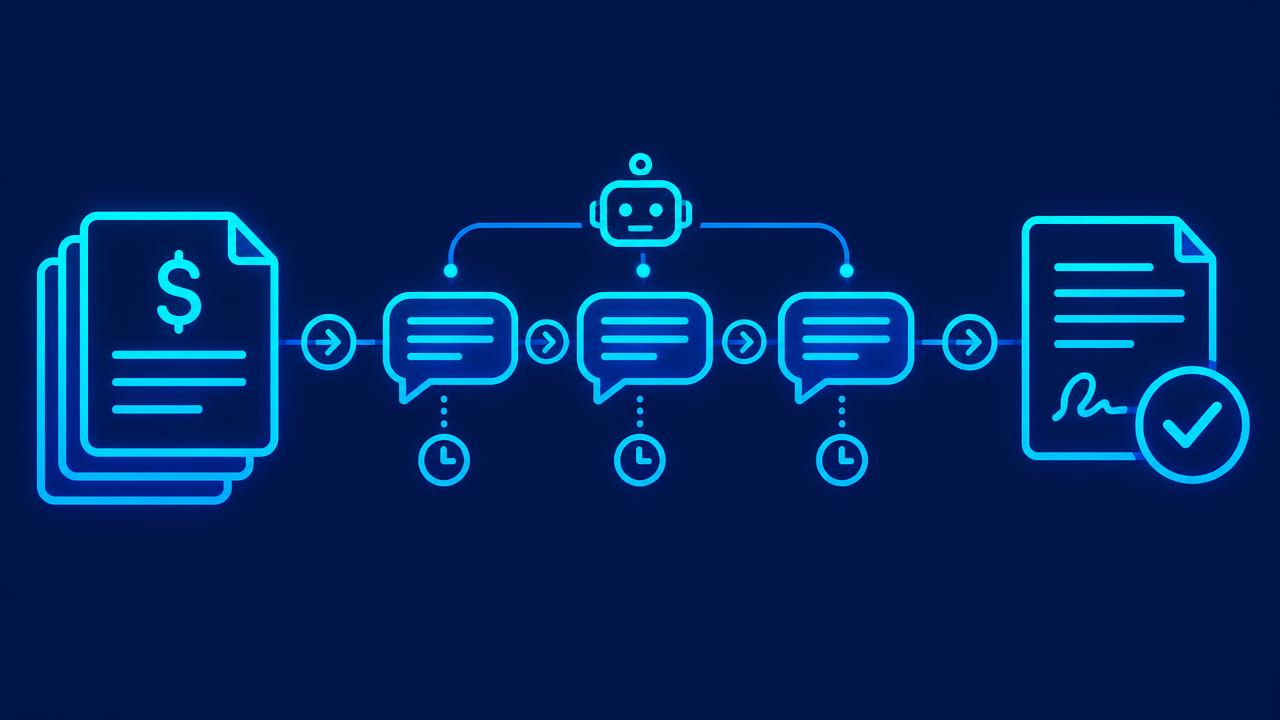
The word consulting can sound like slide decks and advice with no follow through. For small businesses, useful AI consulting is closer to a hands on implementation partner. A typical engagement covers five stages.
1. Discovery and workflow mapping
The consultant interviews the owner and key staff, looks at how customers find and contact the business, and maps each step from first inquiry to paid invoice. The goal is to find bottlenecks: places where requests wait, get lost, or depend on one person remembering to act.
2. Opportunity scoring
Each bottleneck is scored on how often it happens, how much it costs, how risky it would be to automate, and how ready the data is. A missed call problem that happens fifty times a week with clear next steps scores high. A rare, sensitive task that needs expert judgment scores low and stays with people.
3. A focused first project
Instead of automating everything, a good consultant recommends one or two workflows to start. The first project should be small enough to launch in weeks, measurable, and easy to switch off if something goes wrong.
4. Build, connect, and test
This is where the AI is set up: a voice agent or chat assistant, booking rules, follow up messages, and updates to the customer record. Everything is tested with realistic scenarios before customers see it, including what happens when the AI does not know an answer.
5. Training, monitoring, and improvement
Staff learn how to review conversations, take over when needed, and adjust the rules. The consultant tracks results such as response time, booked appointments, and hours saved, then tunes the system over the following months.
Read more about how VANGAI approaches this on our AI strategy consulting page.
The best first AI projects for a small business
The right first project depends on your business, but these workflows consistently make sense for small teams because they are frequent, rules based, and easy to measure.
Answering calls you would otherwise miss
Many small businesses miss a meaningful share of inbound calls during busy hours, lunch, and evenings. An AI voice agent can answer, collect the caller's details, answer common questions from approved information, and book a time or pass the call to a person. See AI voice agents for how this works.
Booking appointments without phone tag
Scheduling eats time on both sides. An AI appointment setter can offer real open times from your calendar, confirm the booking, and send reminders that reduce no shows. Learn more on the AI appointment setter page.
Following up on quotes and inquiries
A large share of quotes never get a second touch. Automated follow up that sends a friendly check in, answers questions, and offers a time to talk can win back jobs that would have quietly gone to a competitor.
Keeping the customer record complete
AI can summarize calls, tag the reason for contact, and update the CRM so the next person who helps that customer has the full story. This is less exciting than a chatbot, but it is often the foundation that makes everything else reliable.
Answering routine customer questions
Hours, service areas, pricing ranges you have approved, what to expect before an appointment: these questions repeat every day. An assistant trained on your approved answers can handle them across your website, text, and email, and hand off anything unusual. See AI customer support.
Internal reporting
Instead of building spreadsheets every Friday, an AI workflow can pull numbers from your CRM and send a short summary: new inquiries, booked jobs, open quotes, and response times.
What AI consulting costs for a small business
Prices vary widely, so treat any figures you see online, including examples in this article, as ranges to question rather than quotes. Most small business AI consulting falls into three models.
| Model | What you get | Best for | | --- | --- | --- | | Assessment or roadmap | Workflow review, scored opportunities, and a written plan | Owners who want clarity before committing | | Fixed scope project | One defined system built, tested, and launched | A clear problem like missed calls or booking | | Monthly managed plan | Ongoing software, monitoring, updates, and support | Teams without in house technical staff |
On top of consulting fees, expect software costs: phone and messaging usage, the AI model, and your CRM. Ask every consultant to separate one time setup from monthly costs so you can compare offers fairly.
A useful way to judge price is payback. If a first project costs a few thousand dollars to set up and frees up enough staff time or wins enough extra jobs each month to cover its monthly cost with room to spare, it can pay for itself within a reasonable period. If the numbers only work under perfect assumptions, the project is probably too broad or not the right first choice.
Calculate your payback before you hire anyone
Use the calculator below with your own numbers. Start with an honest count of the hours your team spends each week on repetitive tasks like answering the same questions, booking, reminders, data entry, and follow up. Then be conservative about how much of that work an AI workflow could handle.
How fast could an AI project pay for itself?
Enter the hours your team spends on repetitive work and what a first project would cost. Example values are illustrative, not quotes or benchmarks.
A payback of 0 months means monthly value does not yet cover the monthly cost. Pick a narrower first workflow or check your inputs.
Your estimate
- Hours freed / month
- 43.3
- Time value / month
- $1,517
- Net value / month
- $1,017
- Months to pay back setup
- 3
Planning estimate only. Time value is team capacity, not guaranteed cash savings, and results are not guaranteed.
Show the calculation
Hours saved per month = weekly admin hours × share automated × 52 ÷ 12. Monthly value = hours saved × hourly value. Net = monthly value − monthly cost. Payback months = one-time setup ÷ net monthly value.
A few tips for using the estimate well:
- Use a real hourly value. Include wages and payroll costs, or the value of the owner's time if the owner is doing the work.
- Stay conservative on automation share. Twenty to forty percent of a task is a sensible starting assumption. Very few workflows should be fully automated.
- Remember time value is not cash. Freed hours only become savings or revenue if they are used for paid work, faster service, or growth.
- Add the revenue side separately. If your project also helps book more appointments or recover quotes, estimate that with your own booking data instead of assuming it.
How to choose an AI consultant: questions to ask
Not every AI provider is a good fit for a small business. These questions help separate partners from tool resellers.
- What would you automate first in my business, and why? A good answer names one or two specific workflows tied to your data, not a generic package.
- How will this connect to my customer records? AI that cannot read or update your CRM creates more manual work.
- What happens when the AI does not know the answer? Look for clear handoff rules to a person, not an assistant that guesses.
- How will we measure success? Agree on two or three numbers before launch, such as answered calls, booked appointments, or hours saved.
- Who owns the data and the setup? You should be able to export your records and understand what you are paying for.
- What are the one time and monthly costs, in writing? Scope creep is the most common reason small AI projects disappoint.
- How do you handle privacy and consent? Texting and calling customers carries rules. A consultant should explain consent, opt out handling, and what information the AI may see.
Red flags to watch for
- Promises of guaranteed revenue or a fixed number of new customers.
- Pressure to automate everything at once.
- No plan for human review or takeover.
- Vague answers about where your data is stored.
- Selling contact lists or outreach to people who never asked to hear from you.
AI consulting vs. doing it yourself
Some owners can set up a basic AI assistant on their own, and for simple needs that is fine. The trade off is time and risk.
| Factor | Do it yourself | AI consulting partner | | --- | --- | --- | | Upfront cost | Low | Higher | | Owner time | High | Low | | Connection to CRM and calendar | Often partial | Planned from the start | | Testing and guardrails | Depends on you | Part of the process | | Ongoing tuning | Easy to neglect | Scheduled and measured |
If you prefer to build your own system with expert help available, VANGAI's self serve platform gives you the same CRM and AI agent tools we use for clients. If you want it done for you, our consulting and implementation services cover the full build.
How VANGAI approaches AI consulting for small businesses
VANGAI builds every system on a unified CRM foundation. That means calls, texts, chats, appointments, and follow ups all land in one customer record your team can see. Our process follows the stages above: we map your workflows, score the opportunities, launch a focused first project, and then manage and improve it.
We work with service businesses, professional practices, and healthcare offices on administrative workflows. Browse our industry pages for examples in fields like HVAC, dental, law firms, and real estate, or see how projects connect across workflow automation and custom AI agents.
What we will not do is promise outcomes we cannot measure, automate decisions that need professional judgment, or contact people who have not agreed to hear from you.
A simple 30 day plan to start with AI
- Week 1: List your top five repetitive tasks and count how often each happens. Pull basic numbers from your phone system and calendar.
- Week 2: Choose one workflow with high volume and low risk. Write down the rules a new employee would need to handle it.
- Week 3: Set up and test the workflow with realistic scenarios, including edge cases and handoffs.
- Week 4: Launch to a portion of customers, review every conversation, and compare results to your starting numbers.
After 30 days you will know whether to expand, adjust, or stop, based on your own evidence rather than a sales pitch.
Ready to find your first AI project?
If you want a second opinion on where AI fits in your business, book a free consultation. We will review your current workflow, suggest a focused first project, and give you a clear estimate of setup and monthly costs before anything is built.
Frequently asked questions
What is AI consulting for small business?
It is a service that helps small business owners identify where AI can save time or win more customers, then designs, builds, tests, and supervises those systems so they work with existing tools like the CRM, phone, and calendar.
How much does AI consulting cost for a small business?
Costs vary by scope. Common models are an assessment fee, a fixed project fee for one system, or a monthly managed plan, plus software usage costs. Ask for one time and monthly costs in writing before starting.
What is the best first AI project for a small business?
A frequent, rules based, low risk workflow such as answering missed calls, booking appointments, following up on quotes, or answering routine questions from approved information.
Do I need clean data before hiring an AI consultant?
Not perfect data, but a usable customer record helps. Many engagements begin by organizing CRM records because AI works best when it can read and update reliable information.
Will AI replace my staff?
For most small businesses, AI handles repetitive tasks so staff can focus on customers and paid work. Sensitive decisions and unusual situations should stay with people, with clear handoff rules.
How accurate is the payback calculator?
It is an illustrative planning estimate based only on your inputs. Time value represents team capacity, not guaranteed cash savings, and actual results depend on your business and how the system is used.
Sources and further reading
Ready to put this into action?
Book a free discovery call and we will map the highest impact AI opportunities for your business.
Book a Call →