How to Follow Up on Quotes and Win More Jobs (Quote Follow-Up Calculator)
Estimate the value of following up on unanswered quotes and estimates, and learn how AI follow-up sequences help contractors and service businesses win more jobs.
By the VANGAI team · · 4 min read
Key takeaways
- Many quotes go unanswered not because the customer said no, but because they got busy or had questions.
- The calculator estimates how many jobs a consistent follow-up could win back and what they are worth.
- A good follow-up answers questions, adds helpful detail, and makes it easy to say yes.
- AI can send timely, personal follow-ups and answer common questions so your team only steps in when needed.
- VANGAI tracks every quote in one CRM so no estimate is forgotten.
The short answer: the job is often won in the follow-up
You visit the property, measure, build a careful estimate, and send it. Then nothing. Silence feels like a no, so many businesses move on. But often the customer is comparing options, waiting on a spouse, checking a budget, or simply forgot. A friendly, helpful follow-up is frequently the difference between a lost quote and a signed job.
Why quotes go quiet
- Unanswered questions. The customer is unsure about scope, timing, or financing.
- Comparison shopping. They are waiting for other quotes.
- Decision makers. Someone else needs to agree.
- Simple forgetfulness. The email is buried.
Try it: what are your unanswered quotes worth?
How many quotes are you leaving on the table?
Estimate the value of following up on quotes and estimates that never got an answer.
Use a recovery rate you can defend. Start small and measure.
Your estimate
- Unanswered quotes / month
- 36
- Jobs won back / month
- 3.6
- Value / month
- $9,000
- Value / year
- $108,000
Planning estimate only. Value is revenue potential from your inputs, not profit, and results are not guaranteed.
Show the calculation
Unanswered quotes = quotes × (1 − share answered without follow-up). Recovered = unanswered × follow-up win rate. Value = recovered × average job value.
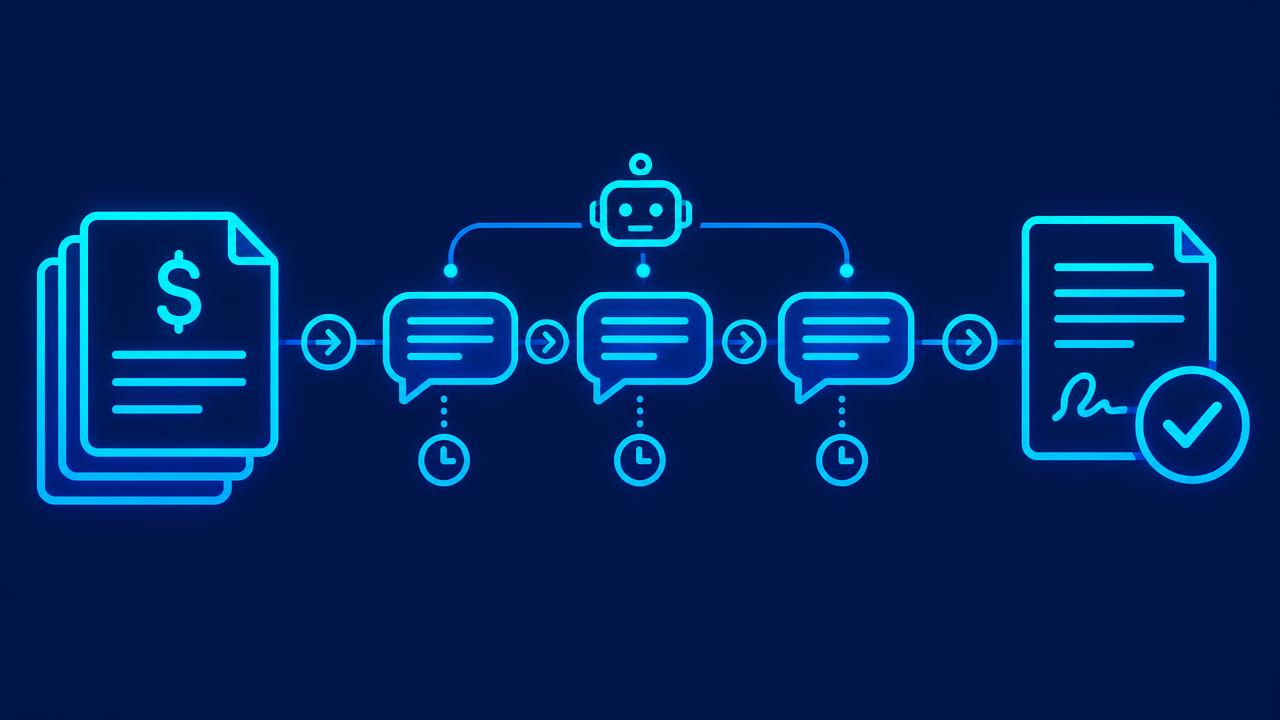
A follow-up sequence that works
- Same day: A thank-you message confirming the quote was sent and inviting questions.
- Day 2 or 3: Answer the most common questions customers have about this kind of job.
- Day 7: Share something useful, like a photo of similar work or what the timeline looks like.
- Day 14: A short, polite check-in asking if they would like to move forward, adjust the scope, or close the quote.
Keep each message short and helpful. Never pressure the customer.
How AI makes follow-up consistent
- Automatic timing. When a quote is marked sent in your connected CRM, the sequence starts on its own.
- Personal messages. AI uses the customer's name, project, and quote details in each message.
- Instant answers. When a customer replies with a question, the AI answers approved questions or hands it to your team. See AI sales and revenue systems.
- Stops when they respond. The sequence ends the moment the customer replies or books.
- Clear reporting. You see which quotes are open, which are won, and why others were lost.
Follow-up mistakes to avoid
- Waiting too long. The first follow-up should come within a couple of days.
- Saying only "just checking in." Add value in every message.
- Pressure tactics. Fake deadlines damage trust.
- Ignoring consent. Only text customers who agreed to texts, and honor STOP and HELP. The FTC CAN-SPAM guide covers email rules.
A two-week plan to improve your close rate
- Count open quotes from the last 90 days and how many were never answered.
- Write your four-step sequence with your team.
- Connect quotes to your CRM so each one has a status.
- Turn on automated follow-up for new quotes.
- Review results after 30 days and adjust timing or wording.
How VANGAI helps
VANGAI builds quote tracking and AI follow-up on one CRM for contractors and service businesses. Our done-for-you team sets it up with you, or you can build it on the VANGAI platform. Explore industries we serve to see examples for your field.
Frequently asked questions
How soon should I follow up on a quote?
Within one to three days, then again around one and two weeks, with a helpful message each time.
How many times should I follow up on an estimate?
Three or four helpful messages over about two weeks is a reasonable sequence for most service businesses.
What should a quote follow-up say?
Thank the customer, answer common questions, share something useful about the project, and offer a clear next step.
Can AI follow up on quotes automatically?
Yes. AI can send timely, personal messages, answer approved questions, and stop as soon as the customer responds.
Will automated follow-up annoy customers?
Not when messages are short, helpful, spaced out, and stop as soon as the customer replies.
Sources and further reading
Ready to put this into action?
Book a free discovery call and we will map the highest impact AI opportunities for your business.
Book a Call →