AI Data Intelligence for Retail, Ecommerce, and Multi Location Businesses
How retailers, ecommerce brands, and multi location businesses use AI data intelligence for forecasting, customer insights, pricing, and automated reporting.
By the VANGAI team · · 5 min read
Key takeaways
- AI data intelligence connects sales, inventory, marketing, and customer data so owners can see what is happening and what will happen next.
- Retail and ecommerce gain the most from demand forecasting, customer segmentation, and automated reporting.
- Multi location businesses use AI to compare locations, spot problems early, and share what works.
- Clean, connected data is the foundation; dashboards and predictions come after.
What is AI data intelligence?
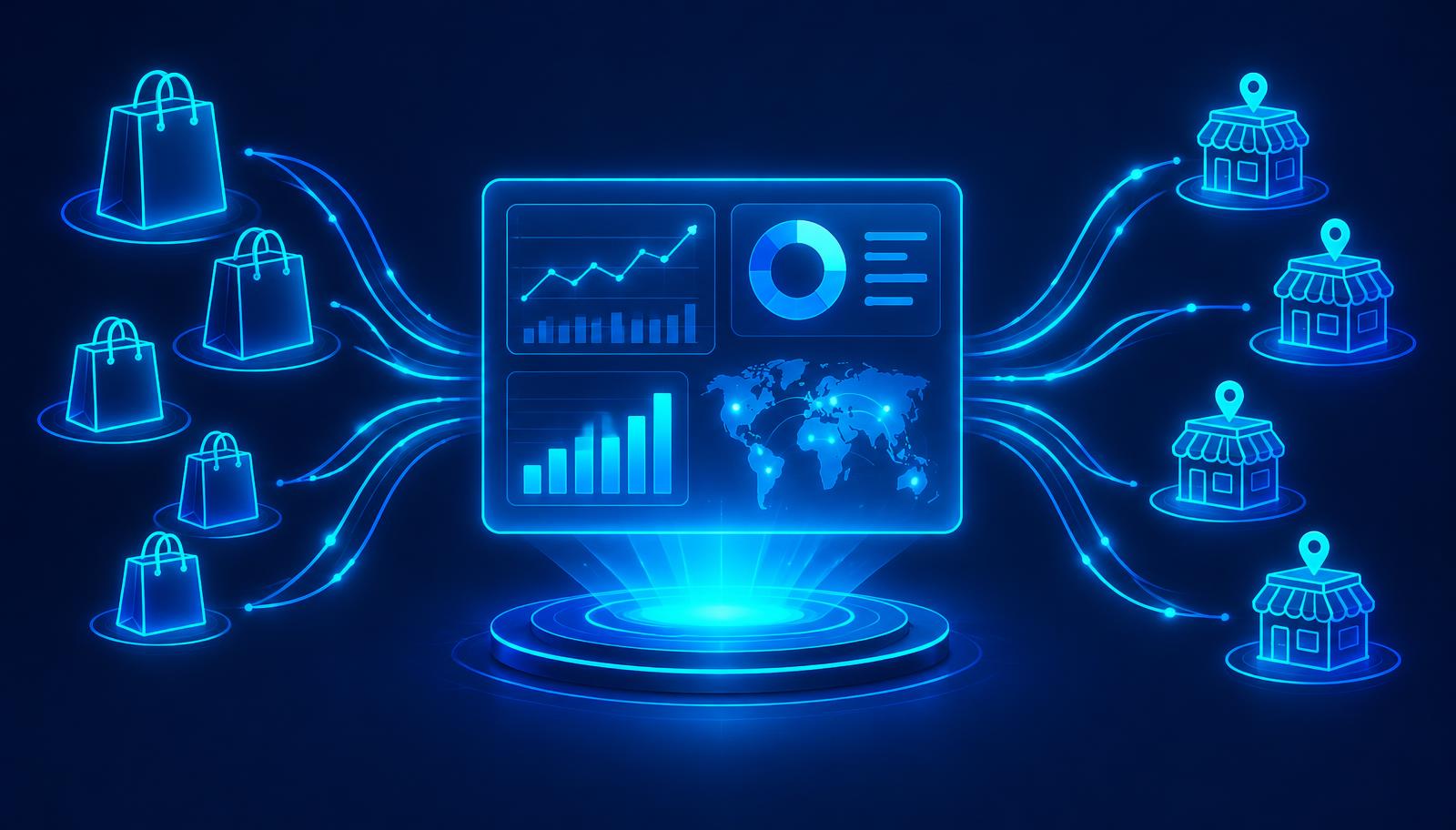
AI data intelligence is the practice of connecting a business's scattered data and using AI to turn it into clear answers, forecasts, and alerts. Instead of exporting spreadsheets from five tools every Monday, owners get a single view of the business and plain language explanations of what changed and why.
Our data intelligence and analytics service builds this foundation and the insights on top of it.
Why retail and ecommerce data is so valuable
Every order, visit, return, and email click is a signal. Most retailers capture these signals but never connect them. Point of sale, ecommerce platform, ad accounts, email tools, and inventory systems each hold part of the story. When combined, they reveal which products drive profit, which customers are about to churn, and which marketing actually works.
High value use cases
Demand forecasting
AI models learn from sales history, seasonality, promotions, and outside factors to predict what will sell and when. Better forecasts mean fewer stockouts, less dead inventory, and less cash tied up in the warehouse. Read more in our predictive analytics guide.
Customer segmentation and lifetime value
AI groups customers by behavior, such as first time buyers, loyal regulars, discount seekers, and lapsed customers. Each segment gets the right message. Lifetime value predictions show how much to spend acquiring each type of customer.
Churn and win back
Models flag customers whose buying pattern suggests they are drifting away, triggering a personalized win back offer before they are gone.
Pricing and promotion analysis
AI measures which discounts actually drive incremental sales and which simply give margin away. It can suggest price changes for slow moving products.
Marketing attribution
Connecting ad spend to actual orders shows which channels produce profitable customers, not just clicks.
Automated reporting
AI generates daily or weekly summaries in plain language: sales were up 8 percent, driven by a specific category, while one location underperformed due to staffing. See AI reporting and analytics.
Multi location businesses
Franchises, restaurant groups, clinics with several offices, and retail chains face a special challenge: comparing locations fairly and spreading best practices. AI data intelligence helps by:
- Benchmarking each location on sales, labor, reviews, and customer metrics.
- Alerting managers when a location's numbers move outside the normal range.
- Identifying what top performing locations do differently.
- Forecasting staffing needs per location based on expected demand.
Building the data foundation
Insights are only as good as the data beneath them. The foundation usually includes:
- Inventory of sources: list every system that holds business data.
- Connection: pipelines that pull data into one place automatically.
- Cleaning: consistent product names, customer records, and location codes.
- Definitions: agreed meanings for metrics like revenue, margin, and active customer.
- Access: dashboards and AI tools with the right permissions.
The U.S. Census Bureau's retail data shows how quickly retail and ecommerce patterns shift, which is why automated, current data beats quarterly manual reports.
Privacy and responsible data use
Customer data must be handled with care. Collect only what you need, explain how it is used in your privacy policy, secure it, and respect opt outs. The FTC's guidance on protecting personal information is a practical starting point, and state privacy laws may add requirements.
Asking questions in plain language
Modern AI lets owners ask questions like "which products had the highest margin last quarter in our Chicago stores" and get an answer with a chart. This only works reliably when the data foundation and metric definitions are in place, which is why we build those first. Our AI integration service connects the tools involved.
Metrics that show impact
- Forecast accuracy and stockout rate.
- Inventory turnover and carrying cost.
- Repeat purchase rate and customer lifetime value.
- Marketing return on ad spend.
- Hours saved on manual reporting.
The bottom line
Retailers and multi location businesses already own the data they need to grow smarter. AI data intelligence connects it, cleans it, and turns it into forecasts and answers that owners and managers can act on every day.
Want to see what your data is trying to tell you? Book a free discovery call and we will review your data sources and quick wins.
Frequently asked questions
What is AI data intelligence for retail?
It is the use of AI to connect retail data sources such as point of sale, ecommerce, inventory, and marketing, then forecast demand, segment customers, flag problems, and automate reporting.
Do I need a data team to use AI analytics?
No. A partner can build the data foundation and dashboards, and modern AI tools let owners ask questions in plain language once the data is connected and defined.
How does AI improve inventory management?
AI forecasts demand using sales history, seasonality, and promotions, which reduces stockouts and overstock and frees up cash tied in inventory.
Can AI compare performance across multiple locations?
Yes. AI can benchmark locations, alert managers to unusual changes, and identify the practices that top locations share.
Sources and further reading
Ready to put this into action?
Book a free discovery call and we will map the highest impact AI opportunities for your business.
Book a Call →